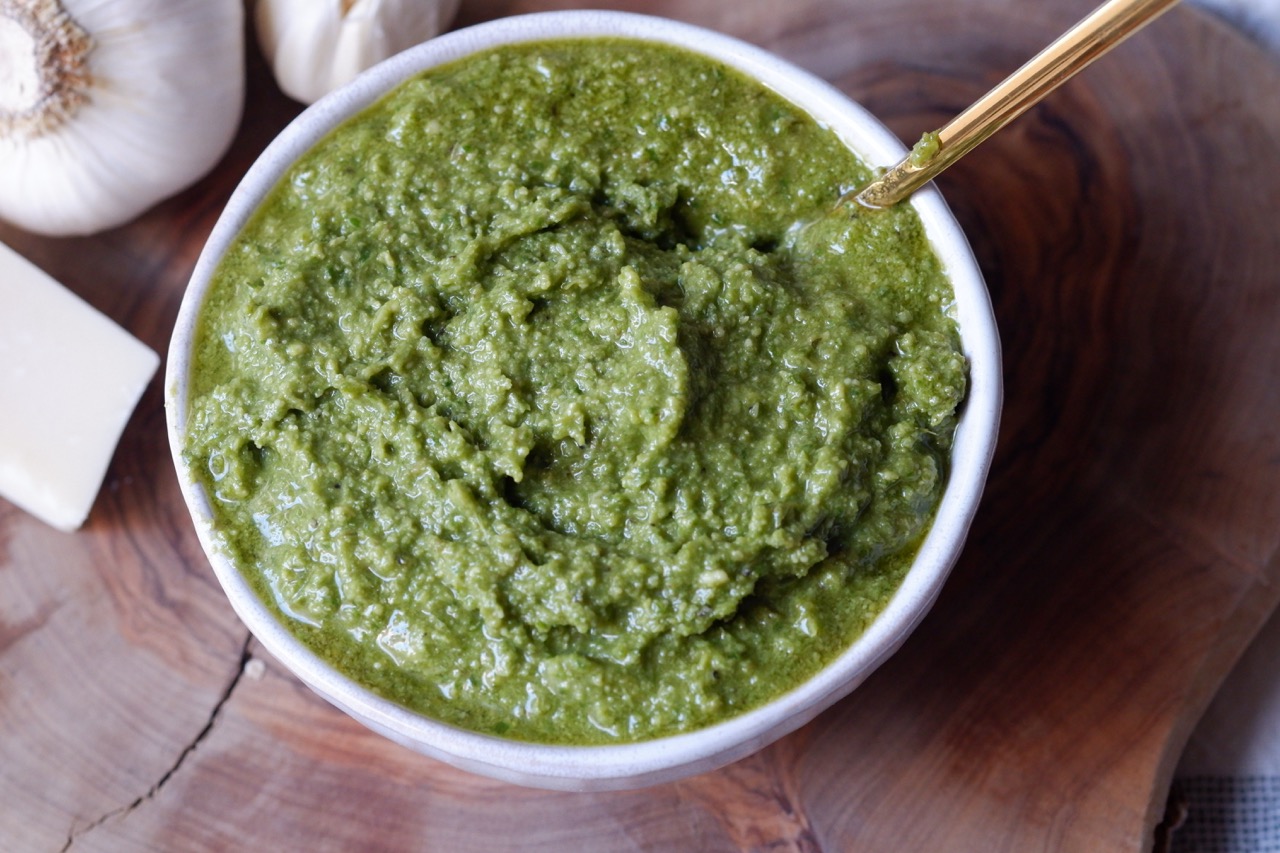
A few seasons ago, my husband decided to take up backyard gardening, and this past year, his garden decided to reward us with an absolute jungle of fresh basil. We harvested basket after basket until our entire kitchen smelled like an Italian market, and we quickly reached the point where we genuinely did not know what to do with all of it. Fresh basil wilts before you know it, but luckily, homemade pesto freezes like an absolute dream.
We turned that mountain of homegrown leaves into big batches of this vibrant, garlic-loaded basil pesto, and having jars and freezer cubes ready to pull at a moment’s notice has been life changing. We have been slathering it over grilled chicken, tossing it with hot pasta, spooning it over crusty bread, and swirling it into scrambled eggs. Once you make your own from scratch, the dull, brown jarred stuff from the grocery store will never hit your shopping cart again.
How to Make Homemade Basil Pesto
Making traditional pesto at home requires just a handful of quality ingredients and a food processor or high-speed blender. The secret to a bright green, restaurant-worthy sauce comes down to the order of operations and treating your basil gently.
You start by building the aromatic base. Add your whole garlic cloves, toasted pine nuts, and coarse salt to your food processor or blender. Pulse these together first until the nuts and garlic break down into a finely ground, fragrant crumb.
Next, add your fresh basil leaves along with the fresh lemon juice and zest. The lemon juice does double duty here by adding vibrant acidity while helping keep the greens bright. Pulse in quick, 1-second bursts. You want to avoid running the motor continuously at this stage because high-speed blades generate heat, which will cook and oxidize your delicate herbs, turning the sauce a muddy brown color.
Once the basil is broken down, switch the motor to low speed and slowly drizzle in the extra virgin olive oil in a steady stream until an emulsified, rich green paste forms.
Finally, turn off the motor completely. Transfer the pesto to a bowl (or work right in the work bowl) and stir in the shredded Parmesan and Pecorino Romano cheese by hand with a spatula. Never blend the cheeses with the high-speed blades; blending dairy at high speeds melts the fats and creates an unpleasantly gummy, paste-like texture instead of a rich, velvety sauce.
Tips and Best Practices
- Dry Your Basil Thoroughly: Any excess water clinging to washed basil leaves will prevent the olive oil from emulsifying cleanly and can cause your sauce to separate. Spin the leaves in a salad spinner or pat them completely dry with paper towels.
- Hand-Fold the Cheese: Blending hard, aged cheeses like Parmesan and Pecorino Romano with hot, high-speed blades breaks down the fats and makes the sauce gluey. Always fold them in gently with a spoon or spatula at the very end.
- Prevent Oxidation: If storing in the refrigerator, smooth out the top of the pesto in a jar and pour a thin layer of olive oil directly over the surface before sealing the lid. This creates an airtight barrier that keeps the basil from turning brown.
- The Freezer Hack: Portion leftover pesto into silicone ice cube trays and freeze until solid. Pop the frozen cubes into an airtight freezer bag so you can thaw the exact portion you need for a quick pasta dish, soup booster, or marinade anytime.
People Also Ask (FAQs)
Can you freeze homemade basil pesto?
Yes, fresh pesto freezes exceptionally well for up to 6 months. Freeze it in silicone ice cube trays for easy single-serving portions, or store it in small airtight containers with a thin layer of olive oil smoothed over the top. Thaw cubes in the refrigerator or toss them straight into warm pasta.
Why did my homemade pesto turn dark brown?
Pesto darkens due to oxidation, which happens when basil leaves are bruised and exposed to air or when hot appliance blades warm the greens during blending. Using short pulse bursts, incorporating fresh lemon juice, and topping refrigerated jars with a layer of olive oil will keep it vibrant green.
Can I substitute other nuts for pine nuts in pesto?
If pine nuts are hard to find or too expensive, walnuts are the most popular alternative and provide a wonderful earthy richness. Roasted almonds, pistachios, or sunflower seeds also work well, but note that the taste will be different than a traditional pesto.
How do you serve homemade pesto?
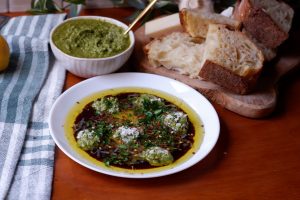
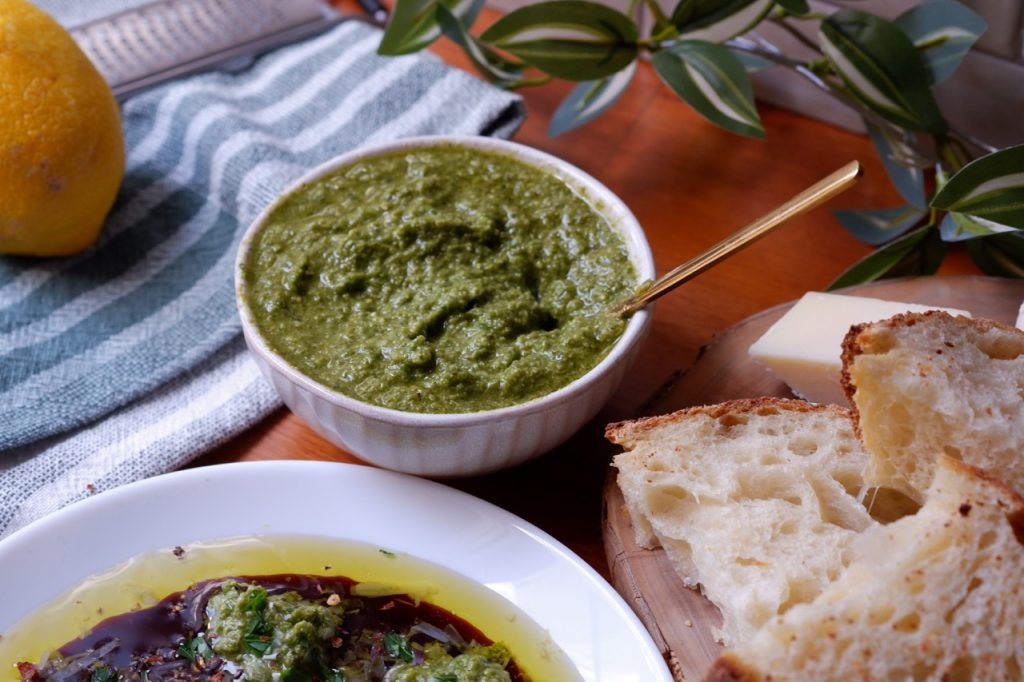
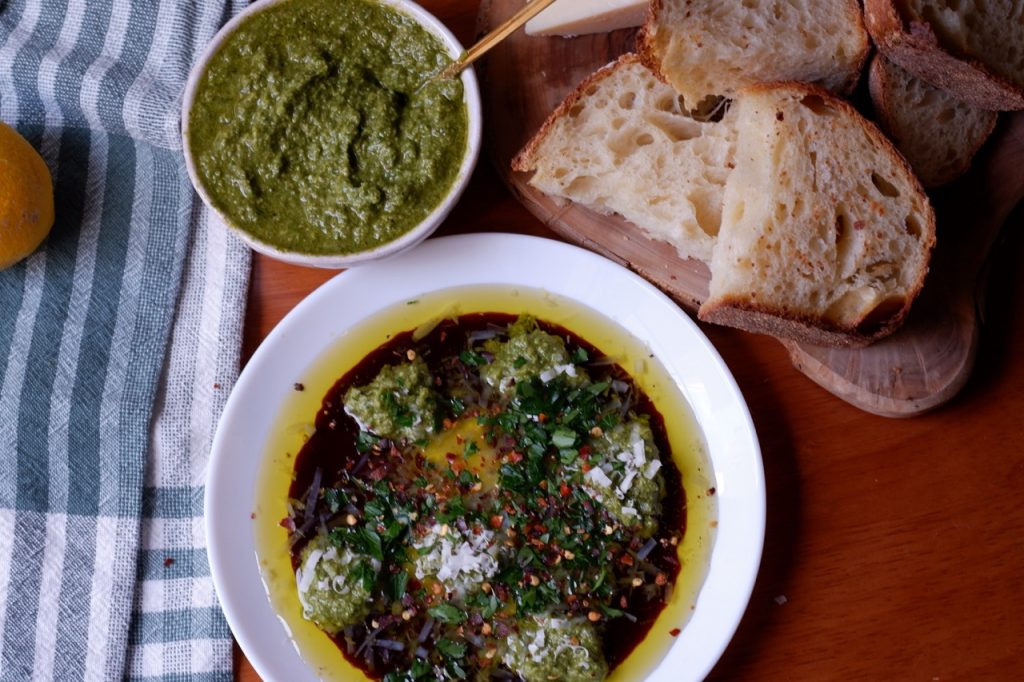
Toss it with warm pasta along with a splash of starchy pasta water, spread it over toasted sourdough or baguette slices, brush it over grilled chicken breasts, or use it as a sandwich spread alongside fresh mozzarella and ripe tomatoes. I also highly recommend making some pesto dipping oil for an easy appetizer (full recipe here)!
More Recipes You May Like
- Creamy Cottage Cheese Parmesan Basil Protein Pasta: A velvety, high-protein pasta dish featuring blended cottage cheese, savory garlic, and plenty of fresh garden basil.
- Caprese Pasta Salad: A light and refreshing summer pasta salad loaded with juicy cherry tomatoes, fresh mozzarella pearls, and herb dressing.
- High Protein Summer Pasta Salad: A satisfying cold meal prep pasta salad loaded with shredded chicken, sweet corn, and a vibrant herb dressing.
- Baked Boursin Gnocchi with Corn and Zucchini: An effortless sheet-pan dinner combining tender gnocchi, summer produce, and melted creamy garlic and fine herbs cheese.
- French Onion Pasta: A rich and comforting savory skillet pasta packed with deeply caramelized onions and melted cheese.
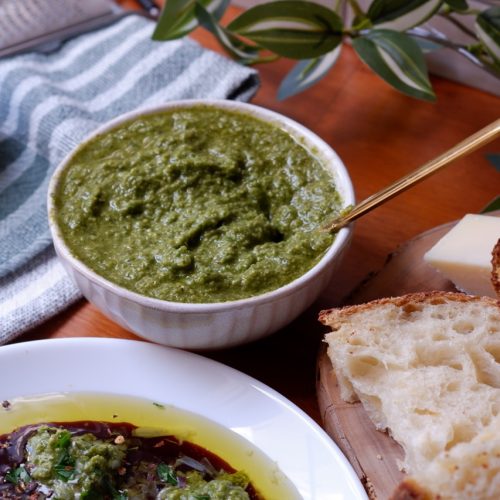
Homemade Basil Pesto

Equipment
- Blender
Ingredients
- 6 cups fresh basil leaves tightly packed
- 1.5 cups Parmesan cheese shredded or grated
- 3/4 cup Pecorino Romano cheese shredded or grated
- 1 1/2 cups extra virgin olive oil
- 3/4 cup pine nuts
- 6 garlic cloves large
- 1/4 cup fresh lemon juice approx juice of 1 large lemon
- Zest of 1/2 lemon
- 1 1/2 tsp salt or to taste
- 3/4 tsp black pepper
Instructions
- Add the peeled garlic cloves, pine nuts, and coarse salt to the bowl of a food processor or a blender.
- Pulse the ingredients in short bursts until the garlic and pine nuts are broken down into a fine, crumbly meal.
- Add the dry, fresh basil leaves, lemon zest, and fresh lemon juice to the work bowl.
- Pulse in brief, one-second bursts just until the basil leaves are coarsely chopped, taking care not to run the motor continuously so the heat does not oxidize or discolor the fresh herbs.
- With the motor running on low speed, slowly stream in the extra virgin olive oil through the feed tube until an emulsified, rich green paste forms. Turn off the appliance and remove the blade or transfer the pesto paste into a mixing bowl.
- Add the shredded Parmesan cheese and Pecorino Romano cheese directly to the pesto mixture. Gently stir the grated cheeses into the sauce by hand using a spoon or rubber spatula until fully incorporated.
- Taste the finished pesto and stir in additional salt and freshly cracked black pepper if desired.
- Serve immediately tossed with pasta, spooned over chicken, or spread onto crusty bread, or transfer to airtight containers to store in the refrigerator or freeze for later.